
What is a Wallpaper and Fabric Collection?
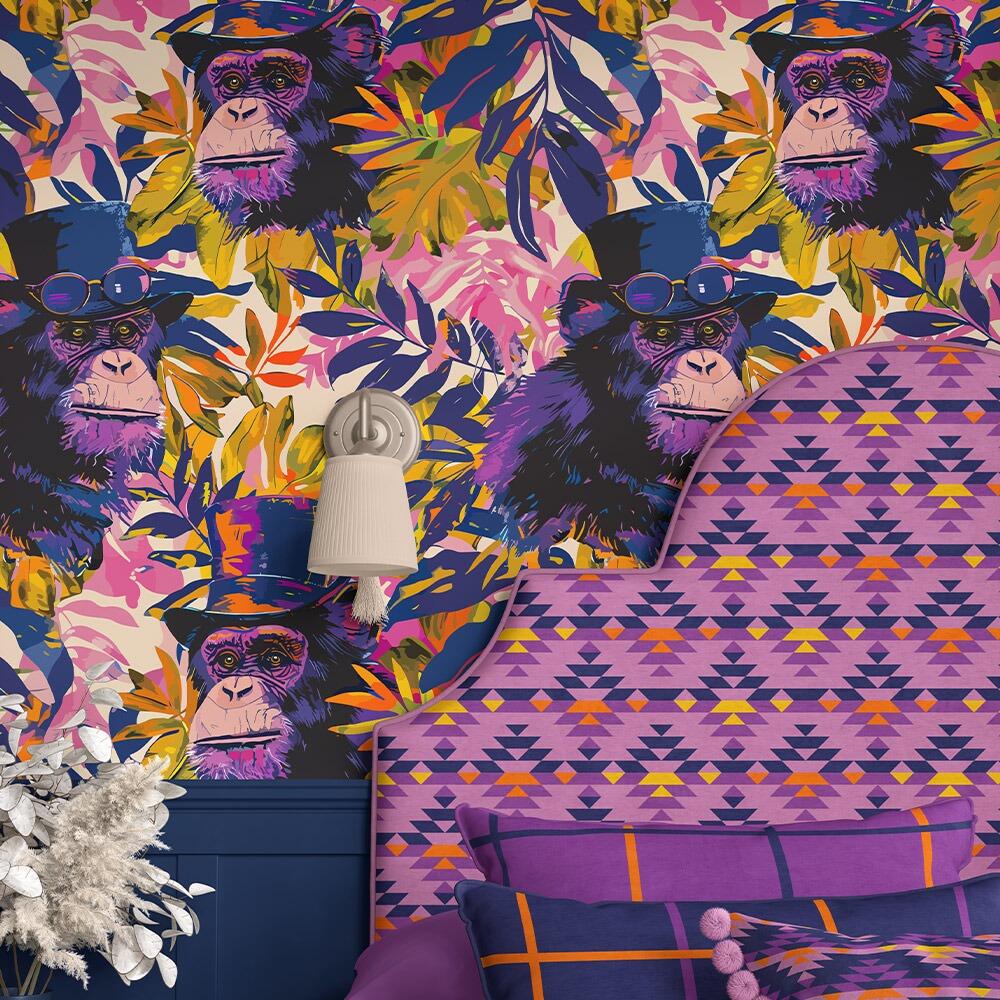
Walk into a beautifully designed home and it's often difficult to pinpoint exactly why everything feels so balanced. The colours flow naturally from one area to the next, the patterns feel connected without being repetitive, and every piece seems to belong. While good lighting, furniture and accessories all play their part, one of the biggest secrets behind these interiors is something that many homeowners never consider: a coordinated wallpaper and fabric collection.
Most people decorate by choosing wallpaper first, then searching for curtains, cushions or upholstery fabric that "goes with it". This approach can work, but it often becomes a frustrating process of comparing hundreds of fabrics, ordering countless samples and hoping that everything comes together. Even if the colours appear similar on screen, subtle differences in tone, pattern scale or style can leave a room feeling slightly disjointed.
A wallpaper and fabric collection turns that process on its head. Instead of trying to force unrelated products to work together, every design within the collection has already been created with coordination in mind. Colours are shared across the range, patterns vary in scale to complement rather than compete with one another, and every wallpaper and fabric has a clear role within a complete decorating scheme.
At Emerson Wolf, this philosophy sits at the heart of every collection we create. Rather than designing individual wallpapers and fabrics in isolation, we create carefully curated families of coordinating designs that make it easier to decorate an entire room with confidence. Whether you're drawn to tropical prints, coastal scenes, botanical florals or bold maximalist interiors, each collection has been designed so the wallpapers and fabrics naturally work together.
This guide explains exactly what a wallpaper and fabric collection is, why interior designers rely on them, and how they can help you create rooms that feel thoughtfully designed rather than accidentally assembled.
What Does a Wallpaper and Fabric Collection Mean?
A wallpaper and fabric collection is a group of wallpapers and coordinating fabrics designed around a shared creative theme. Rather than producing one standalone wallpaper or a single fabric pattern, designers develop an entire family of complementary designs that can be mixed throughout a room.
The important word is collection. Each design has its own personality, but every element has been created to sit comfortably alongside the others. They might share colours, motifs, drawing styles or repeating geometric shapes, allowing homeowners to introduce variety without losing cohesion.
Think of it as the interior design equivalent of a carefully curated wardrobe. Individual pieces don't have to match exactly, but they all belong together because they share common colours, proportions and character. You can combine them in countless ways while still creating a harmonious overall look.
A typical wallpaper and fabric collection might include:
- A statement wallpaper that becomes the focal point of the room.
- A coordinating stripe or geometric wallpaper that provides contrast.
- Printed upholstery fabrics for chairs, stools or headboards.
- Curtain fabrics that echo the collection's colour palette.
- Cushion fabrics that repeat key colours and smaller pattern details.
- Coordinating soft furnishings such as lampshades or accessories.
Every element has been designed together from the beginning rather than paired together afterwards. This subtle difference has a huge impact on the finished room.
For example, a tropical collection might include lush palm leaves, vibrant birds, a bold striped wallpaper, woven-look textures and complementary fabrics in matching greens, corals and deep blues. None of the patterns are identical, but each one feels like part of the same story.
Similarly, a coastal collection could feature hand-painted whales, sailing boats, soft stripes and textured fabrics inspired by driftwood, sea grasses and sandy beaches. Individually they each have their own identity, yet together they create a room with a consistent atmosphere.
This approach gives far more flexibility than simply buying wallpaper with an identical matching fabric. Instead of repeating one print everywhere, you build visual interest by combining several related designs.
How Wallpaper and Fabric Collections Are Designed
Creating a successful collection is a much more involved process than designing a single wallpaper pattern. Designers must think about how every print will interact with every other print, often across dozens of different applications.
The process usually begins with a central source of inspiration rather than an individual pattern. This could be anything from a tropical rainforest and English country garden to the architecture of the Art Deco movement or the colours of the British coastline.
Once the overall direction has been established, designers begin developing a series of complementary patterns rather than simply repeating one idea.
A balanced collection often includes several different types of design.
Hero designs
These are the showstopping prints that immediately capture attention. They often feature larger motifs, intricate illustrations or dramatic compositions that are perfect for feature walls or statement upholstery.
Because hero designs naturally attract the eye, they are rarely used on every surface within a room. Instead, they become focal points around which the rest of the scheme is built.
Supporting patterns
Supporting designs are generally calmer and simpler. They might include stripes, checks, small-scale florals, geometric repeats or subtle textures that complement the main print without competing for attention.
These quieter patterns help carry the colour palette around the room while giving the eye places to rest.
Texture-inspired designs
Not every pattern needs to contain recognisable motifs. Many collections also include subtle woven effects, linen-inspired prints or softly textured wallpapers that introduce depth while remaining visually understated.
These become especially useful when balancing more decorative wallpapers.
Colour continuity
Perhaps the most important element of any collection is colour consistency.
Rather than using exactly the same colours throughout, designers create carefully balanced palettes where individual shades repeat across multiple products. A rich forest green introduced within a botanical wallpaper may reappear inside a striped fabric, while a warm ochre from a tropical bird might be echoed in a geometric print.
These repeated colours quietly connect the room without making the coordination feel obvious.
Why Coordinated Collections Feel More Professional
One of the reasons professionally designed homes feel so comfortable is that nothing appears random. Every decision supports another somewhere else within the room.
Wallpaper and fabric collections make this easier because they remove much of the guesswork.
Instead of asking:
- Does this blue match that blue?
- Are these flowers too similar?
- Will this stripe clash with my wallpaper?
- Does this fabric feel too traditional?
those decisions have already been considered during the design process.
This doesn't mean every room decorated with a collection will look the same. In fact, quite the opposite.
Different homeowners might use exactly the same collection in completely different ways. One person may choose a dramatic feature wall with plain upholstery and patterned cushions, while another could use a coordinating stripe wallpaper throughout the room and reserve the hero print for curtains.
Because every design belongs to the same family, both rooms still feel balanced despite looking completely different.
This flexibility is one of the biggest advantages of designing with collections rather than isolated products.
The Difference Between Matching and Coordinating
People often use the words matching and coordinating interchangeably, but in interior design they describe two very different approaches.
Matching usually means using exactly the same pattern across multiple surfaces. Historically, this might have involved covering walls, curtains, cushions and upholstered furniture in one identical floral print.
While this style has its place in certain traditional interiors, it can easily become overwhelming if every surface repeats the same design.
Coordinating takes a more layered approach.
Instead of repeating one pattern endlessly, it combines complementary designs that share colours, proportions and mood.
Imagine a living room inspired by the sea.
You might have:
- a wallpaper featuring illustrated whales on one wall,
- soft striped curtains inspired by traditional deckchair fabric,
- plain velvet upholstery in a deep navy,
- cushions using a smaller nautical pattern,
- a textured lampshade picking up sandy neutral tones.
Nothing is identical, yet everything belongs together.
This layered approach creates far more depth than simply repeating one print throughout the room. It feels collected rather than copied, and allows each design enough space to be appreciated.
Interior designers often talk about creating rhythm within a room. Coordinated collections naturally achieve this by introducing repeated colours and complementary patterns that guide your eye around the space without making it feel busy.
Perhaps the biggest misconception is that coordinated interiors are only suitable for bold or maximalist decorating styles. In reality, the same principles apply equally well to calm, understated schemes.
A neutral collection might combine soft linen-effect wallpapers, subtle pinstripes, woven textures and gentle botanical prints using creams, taupes and muted greens. The coordination is still there—it is simply quieter.
Whether your style is colourful and expressive or calm and minimalist, a thoughtfully designed wallpaper and fabric collection provides the structure that helps every decorating decision feel more intentional.
In the next part of this guide, we'll explore why coordinated wallpaper and fabric collections consistently create better interiors, how each element of a room works together, and the design principles that professionals use to balance colour, pattern and texture throughout an entire space.
Why Wallpaper and Fabric Collections Create Better Interiors
At first glance, a beautifully decorated room can seem effortless. The colours feel balanced, the patterns work together naturally and every piece appears to have found exactly the right place. In reality, these interiors are rarely the result of luck. They are built around a carefully considered plan, and one of the easiest ways to achieve that plan is by decorating with a coordinated wallpaper and fabric collection.
A collection gives every design a relationship with the others. Rather than asking each wallpaper or fabric to carry the entire room on its own, every element contributes something different. One pattern provides drama, another introduces movement, another softens the scheme and another quietly repeats key colours.
The result is an interior that feels layered, interesting and comfortable rather than busy or confusing.
Many people assume this is something only professional interior designers can achieve, but a coordinated collection makes these same principles accessible to everyone.
Every Room Needs a Visual Hierarchy
One of the most common reasons a room feels uncomfortable is that everything is competing for attention.
Imagine a living room with:
- a large floral wallpaper
- boldly patterned curtains
- geometric upholstery
- heavily printed cushions
- a colourful rug
- statement artwork
Each individual item might be beautiful, but together they create visual noise because nothing has been allowed to become the focal point.
Professional designers instead create what is known as a visual hierarchy.
This simply means deciding which elements should attract attention first and allowing everything else to support them.
A wallpaper and fabric collection naturally encourages this approach because different designs within the collection have different jobs.
For example:
- The hero wallpaper might become the centrepiece of the room.
- A coordinating stripe introduces structure without competing.
- A plain velvet upholstery fabric allows the wallpaper to shine.
- Printed cushions repeat colours found elsewhere.
- A textured lampshade quietly links everything together.
Every design contributes, but none overwhelms the others.
The room feels calm because your eye knows where to look.
Colour Becomes Consistent Rather Than Repetitive
Many homeowners worry that decorating with matching wallpaper and fabric will make a room feel repetitive.
In reality, the opposite is usually true.
Good collections don't rely on repeating exactly the same colours everywhere. Instead, they repeat selected colours in different proportions.
Imagine a botanical collection featuring:
- deep forest green
- sage green
- warm ivory
- soft pink
- golden ochre
One wallpaper may use all five colours equally.
A coordinating fabric may focus mainly on sage and ivory.
A striped design might contain just forest green and ochre.
A velvet upholstery fabric could introduce only the deep green.
Because these colours appear throughout the room, the eye recognises subtle connections without consciously noticing them.
This creates flow.
The room feels unified without looking uniform.
Designers often describe this as allowing colours to "travel" around the room.
Instead of introducing a colour once and forgetting about it, they repeat it in different ways.
A blue found inside wallpaper may reappear in curtains.
The same blue might return again inside cushions.
Finally it appears in artwork or ceramics.
The colour quietly guides your eye through the space.
Wallpaper and fabric collections are specifically designed to make this process feel natural.
Patterns Should Work Together, Not Against Each Other
Choosing patterns is where many decorating projects begin to feel difficult.
People often ask:
- Can I mix stripes with florals?
- Do geometric prints work with animals?
- Can I combine large prints with small ones?
The answer is almost always yes.
The key is understanding balance.
A successful collection usually contains a mixture of pattern scales.
Large-scale patterns
These create impact.
Examples include:
- large tropical leaves
- oversized flowers
- illustrated animals
- dramatic coastal scenes
They naturally become focal points.
Medium-scale patterns
These bridge the gap between statement designs and quieter fabrics.
Examples include:
- small florals
- repeating shells
- stylised birds
- abstract botanicals
Small-scale patterns
These provide texture from a distance.
Examples include:
- stripes
- checks
- dots
- woven effects
- small geometrics
Because collections deliberately include this variation, they become much easier to mix.
Large patterns don't compete because they are balanced by calmer supporting designs.
This is one reason interiors created with coordinated collections often feel richer than rooms decorated using only one repeated pattern.
Texture Is Just as Important as Pattern
People naturally focus on colour first.
Pattern comes second.
Texture is often forgotten completely.
Yet texture plays an enormous role in making interiors feel welcoming.
Imagine covering every surface with perfectly smooth materials.
Even if the colours worked beautifully, the room could feel flat.
Collections allow different textures to contribute alongside the patterns.
For example:
- matte wallpaper
- soft velvet
- woven linen
- embroidered cushions
- painted wood
- natural rattan
- brushed metal
Each catches the light differently.
Each reflects colour differently.
Together they create depth.
This is why velvet upholstery often works so beautifully alongside wallpaper.
Although both may contain similar colours, the velvet absorbs light while wallpaper reflects it.
The room gains richness without adding extra colours.
Decorating Becomes Much Less Stressful
One benefit that is rarely discussed is confidence.
Many homeowners delay decorating for months because they are worried about making expensive mistakes.
Wallpaper is an investment.
Curtains are an investment.
Upholstery can last for decades.
When every choice feels permanent, every decision becomes more intimidating.
Coordinated collections remove much of that uncertainty.
Instead of comparing hundreds of unrelated fabrics from dozens of manufacturers, your choices have already been refined into a family of designs that work together.
You can then concentrate on questions that are actually enjoyable.
- Do you want a bold feature wall?
- Would you prefer patterned curtains or plain ones?
- Should your statement fabric appear on a chair or cushions?
These creative decisions are far easier than wondering whether two completely unrelated fabrics might clash.
Coordinated Doesn't Mean Everything Matches
Perhaps the biggest myth surrounding wallpaper and fabric collections is that every surface should contain the same design.
Modern interior design rarely works this way.
Instead, designers think in terms of repetition and contrast.
Imagine decorating a dining room.
The wallpaper behind the table features large hand-painted lemons.
The curtains use a striped fabric.
Dining chair seats are upholstered in a small geometric print.
The bench uses plain velvet.
Cushions repeat colours from the wallpaper.
Each element references the collection while remaining visually distinct.
If every item used the same lemon print, the room would lose much of its character.
Good coordination celebrates variety.
How Designers Balance Boldness
People are often surprised to learn that professional designers don't necessarily use fewer patterns than homeowners.
They simply distribute them differently.
A bold wallpaper covering every wall can work beautifully if the furniture remains relatively restrained.
Likewise, plain painted walls can support dramatic upholstery.
Collections make this balancing act much easier because supporting patterns have already been designed alongside the hero print.
Think of decorating as having moments of conversation.
One design speaks loudly.
The next speaks quietly.
Another introduces rhythm.
Another provides breathing space.
Together they create a room that feels lively without becoming exhausting.
Flexibility for Different Homes
Another strength of wallpaper and fabric collections is that they adapt to completely different styles of property.
The same collection could be used in:
- a Victorian townhouse
- a modern apartment
- a converted barn
- a coastal cottage
- a country farmhouse
What changes is not the collection itself, but how much of it you choose to use.
A minimalist home might introduce only one statement wallpaper with plain upholstery.
A maximalist interior may combine several coordinating patterns throughout the room.
Neither approach is right or wrong.
The collection simply provides the building blocks.
Rooms Feel Connected Throughout the House
Collections are not only useful within individual rooms.
They also help create continuity throughout an entire home.
One of the easiest ways to achieve this is by repeating colours and supporting patterns between adjoining spaces.
For example, a dramatic wallpaper may appear only in the living room.
The neighbouring hallway could instead use the collection's coordinating stripe.
The dining room might introduce the matching upholstery fabric.
Each room has its own identity, yet moving through the house feels natural because the same design language continues from space to space.
This approach is particularly effective in open-plan homes where several areas remain visible at the same time.
Rather than creating abrupt changes between rooms, coordinated collections help each space flow seamlessly into the next.
Good Design Feels Effortless
Perhaps the greatest compliment an interior can receive is that it simply "feels right."
Visitors may not consciously notice that the cushions echo colours from the wallpaper or that the upholstery repeats the same stripe found elsewhere in the room.
They simply experience a sense of harmony.
That is the real purpose of a wallpaper and fabric collection.
It is not about making every item identical.
It is about giving every element a relationship with the others.
When colours are repeated thoughtfully, patterns vary in scale, textures introduce depth and each design has a clear purpose, decorating becomes less about following rules and more about creating rooms that feel comfortable, balanced and unmistakably intentional.
In the next part of this guide, we'll look at exactly how wallpaper, curtains, upholstery, cushions and accessories work together within a coordinated collection, along with practical advice for building your own room scheme step by step.
How Wallpaper and Fabric Work Together in Every Room
By the time you've chosen a wallpaper you love, it can be tempting to think the hard work is over. In reality, wallpaper is just one layer of a successful interior. The rooms that feel warm, welcoming and professionally designed are those where every surface supports the others.
This doesn't mean every item needs to be patterned, nor does it mean every fabric needs to match the wallpaper exactly. Instead, each element plays a different role, adding colour, texture or visual interest while contributing to the overall scheme.
Understanding how these pieces work together makes decorating far simpler and helps you avoid one of the biggest mistakes homeowners make: treating every decorating decision as a separate project.
Wallpaper Sets the Tone
Wallpaper is usually the first thing people notice when they enter a room.
It covers the largest uninterrupted vertical surfaces, making it one of the strongest influences on the atmosphere of the space.
A bold tropical wallpaper immediately creates energy and movement.
A delicate botanical print introduces softness.
A coastal design can make a room feel fresh and airy.
A geometric pattern often brings structure and rhythm.
Because wallpaper has such visual impact, it usually becomes the foundation for every other decision.
Once you've established the mood, choosing coordinating fabrics becomes much easier because you already understand the room's colour palette and personality.
This doesn't necessarily mean using wallpaper on every wall.
Many interiors benefit from restraint.
A dramatic wallpaper behind a bed or sofa may be all that's needed, allowing painted walls elsewhere to balance the room.
Alternatively, a quieter coordinating wallpaper can be used throughout an entire room while a larger-scale design becomes the feature wall.
One of the advantages of decorating from a coordinated collection is having both options available without worrying whether the designs will compete.
Curtains Bring Height, Softness and Movement
Curtains often occupy almost as much visual space as wallpaper, yet they perform a very different function.
Where wallpaper introduces pattern across the walls, curtains soften the architecture.
They absorb sound, diffuse light and introduce movement through folds in the fabric.
Choosing curtain fabric from the same collection allows colours to be repeated naturally while avoiding obvious repetition.
For example, imagine a room with a colourful botanical wallpaper.
Instead of using the identical floral print for the curtains, a coordinating stripe could provide balance while still echoing the colours found within the wallpaper.
Likewise, a coastal wallpaper featuring whales or sailing boats might pair beautifully with a woven-look stripe that recalls traditional seaside textiles without repeating the illustrations.
This variation is what gives designer interiors their effortless appearance.
Each fabric contributes something different.
Upholstery Anchors the Room
Furniture occupies the centre of the room, making upholstery one of the most important decisions you'll make.
Large upholstered pieces such as sofas, armchairs and headboards act almost like another architectural surface.
They can either support the wallpaper or compete with it.
In most cases, balance is the goal.
If your wallpaper is highly decorative, plain upholstery often works beautifully because it gives the eye somewhere to rest.
Velvet is particularly effective because its rich texture adds interest without introducing another busy pattern.
However, plain doesn't have to mean boring.
A deep emerald velvet, a warm ochre linen or a rich navy fabric can all reinforce colours already present within the wallpaper while allowing the pattern to remain the star.
Conversely, if you've chosen a quieter wallpaper, upholstery becomes an opportunity to introduce more personality.
A coordinating patterned fabric on an accent chair can add another layer to the scheme while remaining connected through the collection's shared colours.
Cushions Tie Everything Together
If wallpaper creates the backdrop and upholstery anchors the room, cushions provide the finishing connections.
Professional designers rarely scatter cushions at random.
Instead, they use them to repeat colours and patterns found elsewhere.
Imagine a room where the wallpaper contains coral flowers, emerald foliage and mustard accents.
One cushion might introduce the coral.
Another repeats the emerald.
A third uses a coordinating stripe containing both colours.
Suddenly the sofa feels connected to the walls.
Nothing has been copied exactly, yet everything belongs together.
Cushions also provide an easy way to experiment with bolder designs.
If you're hesitant about upholstering an entire chair in a colourful print, introducing that same fabric as a cushion allows you to enjoy the design in smaller doses.
Because cushions are easy to change seasonally, they also provide flexibility.
You can refresh a room without replacing larger investments like wallpaper or furniture.
Lampshades Complete the Story
Lampshades are often overlooked, but they can have a surprisingly powerful effect.
Placed at eye level, they naturally attract attention when illuminated and provide another opportunity to reinforce the collection.
A fabric lampshade covered in a coordinating print can quietly repeat colours already present elsewhere without dominating the room.
Because lampshades occupy relatively little space, they can comfortably feature bolder patterns that might feel overwhelming on larger pieces of furniture.
They also create continuity between different areas of the room.
For example, a coordinating lampshade placed beside a reading chair instantly links that corner with the rest of the decorating scheme.
Accessories Should Echo, Not Compete
Accessories are where many decorating schemes begin to lose focus.
After investing in wallpaper, curtains and furniture, it's tempting to buy decorative objects individually without considering how they relate to the room.
Collections help prevent this because they provide an established colour palette.
Instead of introducing entirely new colours, accessories can reinforce those already present.
Ceramics.
Artwork.
Throws.
Vases.
Candles.
Even books can contribute to the overall palette.
The goal isn't to create a room where everything matches perfectly.
It's to create enough repetition that every object feels intentional.
How to Build a Coordinated Room
Professional designers rarely choose every product at once.
Instead, they build a room layer by layer.
Step One: Choose the Hero Design
Every scheme needs a starting point.
This is usually the wallpaper that first inspired the project.
It might be a dramatic tropical scene, an expressive floral or a striking coastal illustration.
Everything else grows from here.
Step Two: Identify the Key Colours
Rather than trying to use every colour within the wallpaper equally, select three or four that you'll repeat throughout the room.
These become your decorating palette.
Some colours will dominate.
Others will appear only occasionally.
This variation creates balance.
Step Three: Introduce Supporting Patterns
Once the wallpaper has been chosen, look for quieter designs that complement rather than copy it.
Stripes, geometrics, textured fabrics and smaller-scale prints all help create variety.
Because they belong to the same collection, they naturally share colours and proportions with the hero design.
Step Four: Add Plain Areas
Every room benefits from moments of calm.
Plain velvet upholstery.
Painted woodwork.
Neutral rugs.
Simple flooring.
These quieter surfaces allow decorative wallpapers and fabrics to breathe.
Without them, even the most beautiful patterns can begin to feel overwhelming.
Step Five: Repeat Colours
This is where collections really come into their own.
Instead of introducing new colours, repeat those you've already chosen.
A green found in the wallpaper appears on a chair.
The same green returns inside a cushion.
Finally it appears again in a ceramic vase.
These repeated touches create subtle rhythm throughout the room.
Common Mistakes When Decorating with Wallpaper and Fabric
Even experienced decorators occasionally fall into the same traps.
Fortunately, they're all easy to avoid.
Choosing Everything Separately
Buying wallpaper from one brand, curtains from another and upholstery somewhere else often results in endless sample ordering and uncertainty.
Starting with a coordinated collection removes much of this guesswork.
Using Too Many Hero Patterns
Every room needs contrast.
If every wallpaper, curtain and chair is equally bold, nothing stands out.
Allow one design to lead while the others support it.
Forgetting Plain Fabrics
Plain fabrics are not empty space.
They provide balance.
A luxurious velvet or textured weave can often contribute more to a room than another busy print.
Ignoring Texture
Colour and pattern are only part of the story.
Combining matte wallpaper with velvet, linen, timber and woven materials creates far richer interiors than relying solely on printed surfaces.
Introducing Unrelated Colours
One bright accessory purchased on impulse can unintentionally disrupt an otherwise harmonious room.
Before adding something new, ask whether it repeats or complements colours already present.
If not, it may be drawing attention for the wrong reasons.
Choosing the Right Collection for Your Home
Every collection tells a different story.
The right choice depends less on current trends and more on how you want your home to feel.
If you enjoy vibrant, uplifting interiors filled with colour and energy, tropical collections such as Pina Colada bring together exotic botanicals, bold stripes and richly coloured coordinating fabrics.
For homes inspired by the coast, Ocean Symphony combines maritime motifs, calming blues and relaxed textures that capture the character of the British seaside without feeling overly themed.
Those drawn to flowers and gardens may prefer the layered botanical designs found in Sunset Garden, Twilight Blossoms or Violet Cascades, where coordinating florals, stripes and fabrics make it easy to decorate everything from bedrooms to living rooms.
If your taste leans towards expressive, colourful interiors, collections such as Ape Couture, Venomous Vines and The Herons offer dramatic statement wallpapers balanced by complementary fabrics that allow even bold interiors to feel cohesive.
For cheerful, Mediterranean-inspired decorating, Lemon Zest pairs vibrant citrus motifs with coordinating stripes and fabrics that bring warmth and personality to kitchens, dining rooms and garden rooms.
Each collection has been created as a complete decorating toolkit rather than a series of unrelated products, giving you the freedom to build a room in countless different ways while maintaining a consistent design language.
Why Decorating with a Collection Makes Sense
The best interiors rarely happen by accident.
They're the result of thoughtful decisions that build upon one another until the room feels balanced, comfortable and unmistakably personal.
A wallpaper and fabric collection doesn't dictate exactly how your home should look.
Instead, it provides a carefully designed framework that makes good decisions easier.
Rather than worrying whether colours clash or patterns compete, you can focus on creating a home that reflects your own personality and lifestyle.
Whether you choose a single feature wall with coordinating cushions or decorate an entire room using wallpaper, upholstery, curtains and accessories from one collection, the underlying principles remain the same.
Repeat colours.
Vary pattern scale.
Introduce texture.
Allow each design to perform a different role.
When these elements work together, decorating becomes far more enjoyable, and the finished room feels considered, confident and effortlessly cohesive.
If you're ready to begin your own decorating project, explore Emerson Wolf's curated wallpaper and fabric collections, where every wallpaper, fabric and coordinating design has been created to help you build a room that feels beautifully connected from floor to ceiling.